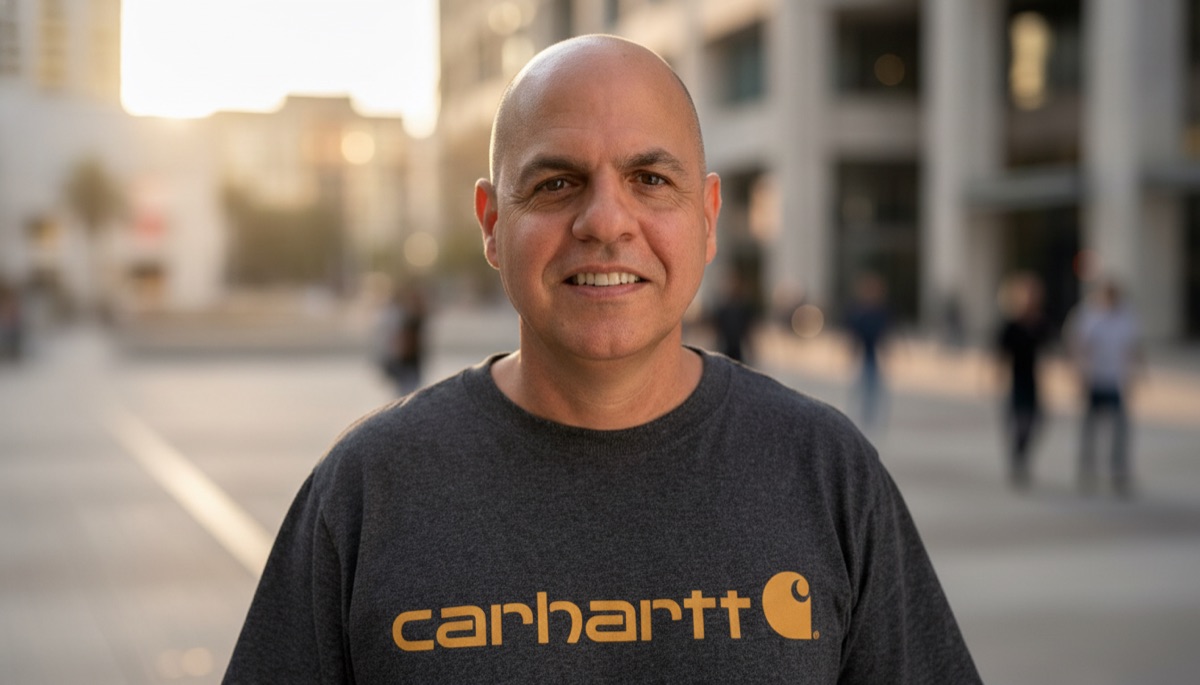
Eli Mansoor has spent more than ten years in cloud, including time as country manager for CloudHealth in Israel and four years at AWS Israel. He now operates OskaQ, an independent Cloud Procurement and FinOps-as-a-Service practice. Almost every engagement he runs is brought to him by a stakeholder other than the CTO.
Mainstream FinOps places ownership of the discipline with the CTO. Eli Mansoor will tell you to look again. He has spent more than ten years in cloud, including time as country manager for CloudHealth in Israel and four years at AWS Israel. He now operates his own independent practice, and in nearly every engagement he runs, he is brought in by a different stakeholder. Almost none of them are CTOs.
Karate has been part of Eli's life longer than FinOps. He attributes two habits to the practice. The first is observation: knowing who in a room is a supporter, who is a blocker, who is willing to act, and who is invested in protecting the status quo. The second is consistency: turning up to the dojo when it would be easier not to, because the work compounds quietly and only over years. Both habits travel directly into the way he runs FinOps engagements. The technical fight is rarely the hard one. The political one is, and it is fought over years, not quarters.
What follows is a working argument about where FinOps is moving. Out of engineering. Into finance and procurement. Past the cleanup work that defined the last decade, and toward the architectural decisions and cloud agreements that decide the next one.
The Day-Zero Shift: When Founders Call FinOps Before They Have a Cost Problem
For most of the last decade, FinOps was a fix called in after the bill had grown too large to ignore. The buyer profile is shifting now, and not in the direction most practitioners expect.

Q: You've been in this market long enough to remember when FinOps was something a company called only after the bill scared them. What are you seeing now?
A trend that starts in Israel, and when something starts in Israel it usually becomes international. I support startups that come to me saying, "Eli, we know FinOps is going to be an issue. Cloud spend is going to be an issue. Be with us from day one. Let's not generate the waste." On the other end, banks, large enterprises, and the Israeli government's cloud programmes want a FinOps practice at scale before the bill grows up. Both ends of the spectrum arrive at the same conclusion. Don't wait for the problem.
Q: What's driving it? The FinOps Foundation? Hard experience?
All of the above. The Foundation gave it a name and made it a thing, kudos to the team. But people who worked in one organisation also understand it's an issue. Now they're founders. They care about their money. They know fixing data architecture, databases, or Kubernetes clusters easily takes a year or two. They want to start that year tomorrow. I recently spoke with a second time founder, I asked what he is going to do differently this time… His answer was, I will have an architect from day one, and of course, you will inspect our decision from day one.
The Elephant Next to the Cleanup: Why Low-Hanging Fruit Stalls Out
Most FinOps engagements measure success in volumes of discs deleted, snapshot cleaned up and instances rightsized. The numbers report well. Eli draws a different line, between work that shows up in a financial report and work that does not.

Q: You mention architecture before optimisation. Where does it sit in your strategy?
You can do low-hanging fruits forever. Rightsizing, cleanups, instance generation changes. It's needed, and it shows ROI. But is this FinOps? Is this going to change the company's financial reports? I'm not sure. If the product is keeping the data five times, you're going to pay five times for the data. If the way you run Kubernetes is not optimised, you keep stepping up the same unutilised resources again and again. If you're not hitting the core issue, you have a nice FinOps process with a great ROI. But the bigger issue is always there, because companies built for the cloud quickly, before FinOps practice was available. They cared about features, security, scale, supporting customers. Nobody asked about K8s scheduler efficiency. The waste is structural.
Most FinOps engagements stall at the surface. Cleanup, rightsizing, and instance changes deliver visible wins, but the bigger lever sits in product architecture, Kubernetes utilisation, AI prompts scripting, and GPUs. This is where developers make decisions every day that shape the cloud bill for years. Visibility alone does not move that lever. Teams have to own the cost implication of their work, not the FinOps team chasing them from the outside.
At one of the leading cyber firms Eli supports, he helped install a programme that runs daily, not quarterly. Every R&D team holds the cost context of its own work. Developers know what a feature will cost before they ship it, what a disc change saves, what a Kubernetes utilisation choice means for unit economics. Each team reports its own savings inside the normal cadence, not as a quarterly review. He has been running the programme for over two years. From the office of the CFO standpoint, company revenue increased by over 50% YoY while cloud spend remained unchanged. The company's margin soared. He calls it the work he is proudest of.
Q: What is the minimum requirement for a strong FinOps foundation?
First, there has to be an executive sponsor. Without that, you get a nice FinOps process, but not a real one. People need to make decisions about changing priorities, putting developers on A instead of B. That's not your call to make. The executive sponsor is the one who gives the FinOps function the licence to ask hard questions. Without that licence, none of the structural work survives the first political pushback.
Q: Once you have the sponsorship, you still have to walk into a team that built the cluster. How does that go?
Now comes the maturity of the people who built it. If I look at your Kubernetes cluster, 50, 60, 70 percent of your workload is waste, same goes with your GPUs. Do you know that by default a single container holds all of your GPU resources? Can you imagine the waste? They can cover it up. You'd be amazed how many organisations cover the problem. Or they can say, "You're a professional. Let's run the analysis." The waste is always there. The question is whether the organisation can admit it. The mature ones do, and the structural savings follow. The immature ones spend two years cleaning discs while the elephant grows.
Where FinOps Ownership Is Actually Moving: Out of Engineering, Into Finance
The mainstream view in the field still has FinOps reporting into engineering, ultimately under the CTO. The hiring pattern Eli sees on the ground points elsewhere.

Q: Who hires you when an organisation decides to take FinOps seriously?
I report to VP Operations, VP Finance, CFOs. These are the people who bring me in. They want to cut the bullshit. They don't want the person who built the Kubernetes cluster to tell them how the Kubernetes cluster operates perfectly. They want someone from the outside to tell them what the situation actually is. That's the trend. Almost every organisation I support, I'm brought in from the finance side. The CTO is not it. He has other priorities. He has his interest. He has his dignity. He's not going to fix his baby. He's going to justify it.
Q: FinOps gravitating closer to the CFO than the CTO is a different view not often heard. What evidence are you seeing?
The most concrete signal is the channel through which I am introduced to new organisations. It is no longer a technology practice. It is a finance practice. Advisory firms and consultancies that already work with CFOs are starting to bring FinOps practitioners into their engagements through the same door they bring an FP&A specialist or a procurement advisor. The hiring pattern is consistent. The buyer is finance. Once finance is in the room, the conversation that follows is not about infrastructure tuning. It is about margin improvement and procurement.
The Cloud Agreements Frontier: Why Procurement Is the Next FinOps Skill
Few FinOps practitioners have ever sat across from a hyperscaler's commercial team. Most have never signed a multi-year cloud contract. Eli argues this is the next gap to close, and the one with the largest dollar leverage in the discipline.

Q: Take us through the procurement side. Where do you see this going?
On an ongoing basis I support organizations negotiating their cloud agreements. Those can be commitment and/or collaboration agreements with cloud vendors. Last year, I attended procurement events instead of FinOps X, because that is where the conversation I wanted to be in was happening. The reason is structural. The FinOps profession today is mostly held by practitioners with six months, one year, two years of experience. Almost none have a procurement background. They do not know what they can negotiate and how. They have never sat in a vendor negotiation. On the other side, the procurement community is starting to notice the cloud-spend opportunity but they lack the language and the skills over what we negotiate (not limited to discount only). The two professions will converge into a new one. It will be a thing.
Q: And when you're working those agreements, what does it actually take?
At least 6 months of preparation, not a one-month negotiation. You build the stage for the next agreement by setting up the organisation's interactions, collaborations, data, and internal teams so they can outline the story that serves as the baseline for negotiation from a strong position. You don't negotiate discounts. You negotiate a story you've spent a year building.
The AI Stress Test, and the AI Tool
Two things are happening at once. Cloud bills are jumping because of AI workloads. The same AI is doing FinOps work that used to take practitioners hours. Eli sees both from the inside, and his calibration is sharper than most.

Q: AI for FinOps, or FinOps for AI?
Both, and they reinforce each other. I have skills in Claude that model reservation purchases for organisations spending tens of millions a month. The agent runs the analysis in minutes; the same work would take a senior practitioner hours or even days. I also use Claude to produce the monthly state-of-the-cloud report for every CFO I support, customized to what that CFO actually wants to see. The thinking happens at the human first. The AI executes faster. And when a practitioner uses AI well, they often find the real problem. A few months ago I told a practitioner at an AI company spending millions a month on cloud to stop running another cleanup pass and ask her own AI what the bigger waste actually was. Her approach changed from that day. The next day she started to build her first Claude FinOps skills and never stopped since.
Q: And the cost side? Is the AI bill biting yet?
I met an organisation earlier this week spending tens of millions a month on cloud. Their bill is now 50 percent more, just from AI. Organisations will have to control AI cost. Otherwise there won't be an organisation. You won't be profitable. You won't have a positive margin. There will be a trend back to on-prem, because not everyone can pay for tokens forever. People don't know how to use tokens efficiently. You take a GPU at twenty thousand dollars a month and you run one container on it. That's a disaster. GPU virtualisation, on-prem models, thinking-time limits, prompt economics. That's the work now.
Be the Unicorn: A Closing Note for Practitioners Six Months In
The discipline is widening, and the pay is following the people who widen with it. The closing question of every CVL interview asks what the senior practitioner would tell the junior practitioner stepping into the field today. Eli's answer is uncompromising.

Q: For a young practitioner stepping into all of this, what's the recommendation?
You need to be the quarterback of the organisation. You'll be in discussions with R&D managers, R&D directors, DevOps engineers, AI training experts. If you're not professional, if you don't speak the language, if you're not two steps ahead on infrastructure and costs, they will not take you as a persona. Do the extra mile. Learn. Learn. Learn. There's tons to learn. It's a never-ending story. You learn AWS, then GCP, a different language. You learn Azure, totally different language, where the documentation is, sorry to say, horrible. You need to be half architect and you don't have a chance to learn the pricing model of most of Azure services. They really did a great job in making their pricing model the most complex one I know. You also need to speak the language of finance and procurement. You need to be a unicorn. There's a huge opportunity for all of us. You see who is taking it to the next level. You see who is not.
Key Takeaways
Eli Mansoor's perspective on the next decade of FinOps sharpens with these essential insights:
Day-zero shift. Founders are calling FinOps in before the cost problem arrives, not after. The waste-prevention engagement is starting to outweigh the waste-cleanup one.
Architecture, not cleanup. Rightsizing and disc cleanups report well, but rarely move the financial statement. The real FinOps levers sit in Kubernetes utilisation, GPUs, data architecture, tokens, and product decisions made by R&D every week.
Ownership shift. FinOps is moving away from the CTO and into Finance and Procurement. The buyer is changing, and so is the conversation.
Procurement frontier. Cloud-agreement work is the next frontier of FinOps practice. Few practitioners have the negotiation experience required. A good cloud agreement is built over a year, not a month.
AI as both. AI is inflating cloud bills by half in some organisations. The same AI is doing reservation modelling and CFO reporting in minutes. Practitioners who learn it well will pull ahead fast.
The unicorn standard. The senior practitioner of this decade speaks the language of engineering, finance, and procurement at once. There is no shortcut.
The Bottom Line
The FinOps practice that wins this decade looks little like the one that defined the last. Companies that bring FinOps in from day one will spend less and ship faster. Practitioners who stay on the surface will lose ground to AI agents and to colleagues who learn how to use AI and the finance and procurement side. The discipline is widening, and the value is moving with it.
About Eli Mansoor
Eli Mansoor has spent more than ten years in cloud, having led CloudHealth in Israel as country manager and spent four years at AWS Israel. He now operates OskaQ, an independent Cloud Procurement and FinOps-as-a-Service company. He co-authored Mastering AWS Cost Optimization with Yair Green almost a decade ago, a reference still circulating among practitioners today. Connect with Eli on LinkedIn.
Cloud Value Lab publishes practitioner-led thought leadership at the intersection of FinOps, GreenOps, and AI Economics. If you are a practitioner or subject matter expert interested in sharing your perspective, reach out to David May.